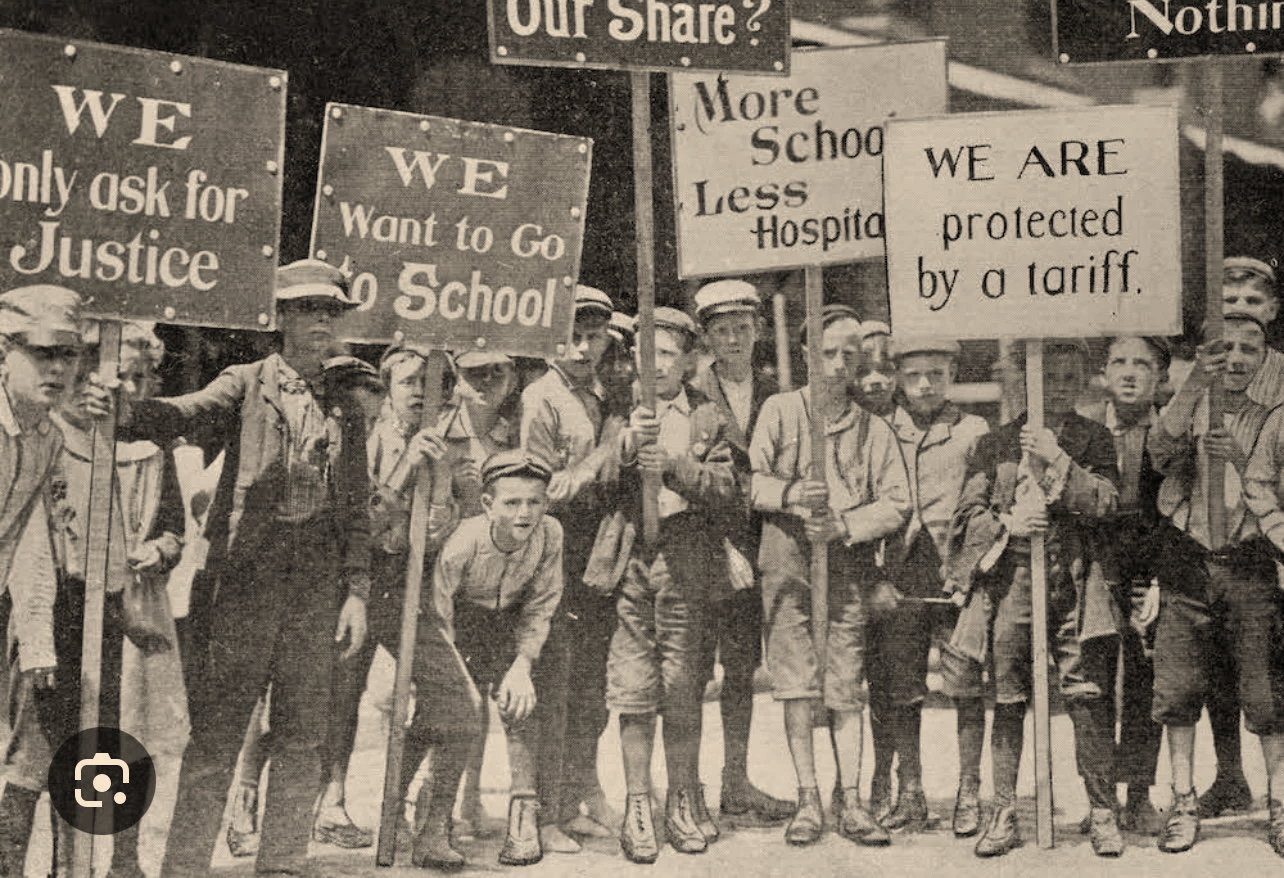
I arrived in Paris at dawn, stepping off the train into a city singing with purpose. The boulevards were already filling with clerks and students in stiff uniforms, each carrying the day’s hopes. The day smelled faintly of coal smoke and coffee drifting from the cafes alongside the Rue de Rivoli; but the excitement today was not centered on food or business, it was political. Inside the Ministry of Public Instruction, Jules Ferry and his colleagues were finalizing the laws that would transform French childhood forever.
As I stood outside the building, I could feel the tension and optimism radiating from the crowd. A group of teachers, some of whom were poorly dressed, others proudly buttoned, spoke in urgent but hopeful tones. “Free, compulsory, secular” one whispered, as if reciting a spell. “At last, the children will belong to France, not to ignorance.”
When news spread that the laws had passed, cheers erupted. I watched a young mother clutch her son’s shoulders and say “You will go to school Henry. You will be someone.” Her voice shook with pride and fear, pride at opportunity but fear at what it may cost. This moment revealed a powerful truth: the French state was redefining childhood as a national project, one that demanded discipline, literacy, and civic loyalty. The idea of the educated child; obedient, patriotic, and morally upright was now set in stone as it relates to the law. But I wondered what this would mean beyond the polished streets of Paris.